What Tennessee Business Leaders Need to Know About AI Readiness
AI is already transforming how work gets done—but most organizations aren’t ready for it. AI readiness isn’t about choosing tools. It’s about aligning your cybersecurity, data, processes, and IT strategy so AI can be used safely and effectively. Without that foundation, AI increases risk. With it, AI becomes a measurable advantage.
Are Tennessee Businesses Asking the Wrong Question About AI?
Across Tennessee, many organizations are asking:
- “Which AI tool should we use?”
- “How do we get more out of ChatGPT or Copilot?”
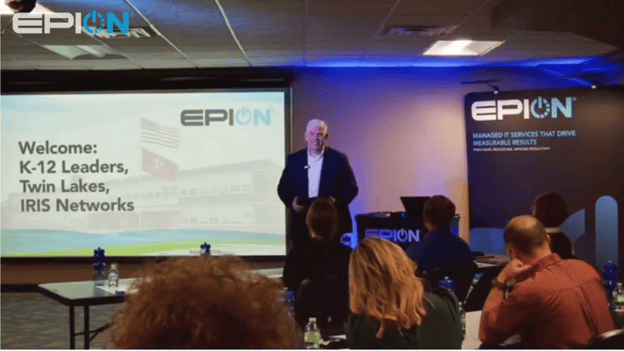
But at a recent EpiOn event, one moment stood out:
“We just built a company in about seven minutes using AI—from logo to website to marketing assets.”
That’s impressive.
But it also reveals a bigger issue:
Speed is no longer the constraint. Readiness is.
Related Article: How to Build a Cyber Resiliency Plan for Your Business
What Is AI Readiness for Business?
AI readiness is the ability to adopt, govern, and scale AI safely using strong cybersecurity, data governance, and IT strategy.
For organizations across Tennessee, that means:
- Knowing where your data is—and who can access it
- Ensuring your systems align to cybersecurity standards
- Defining clear, repeatable business processes
- Training your team to use AI responsibly
Without these elements, AI doesn’t create efficiency—it creates exposure.
Why Is AI Readiness More Important Than AI Tools?
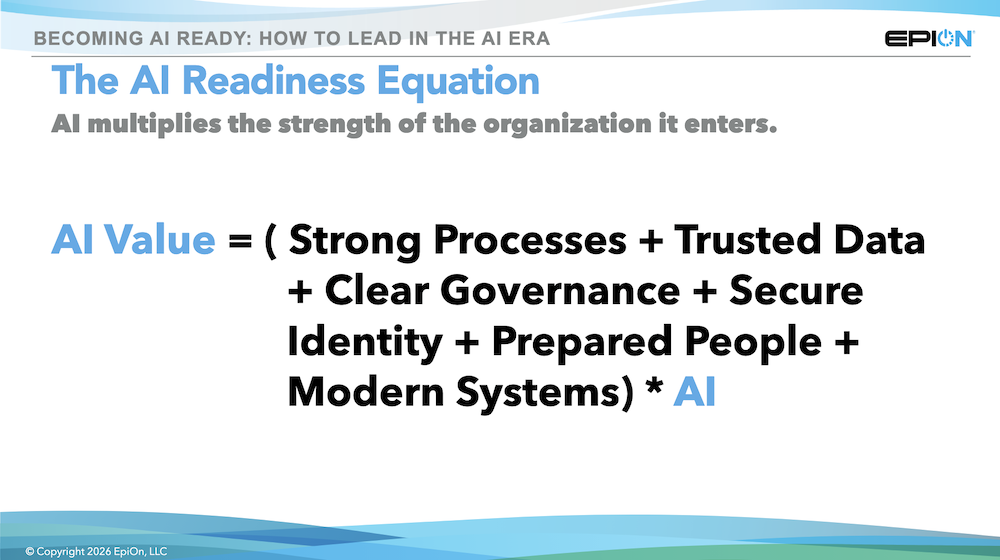
Because AI amplifies whatever environment it enters.
As discussed during the event:
“AI isn’t just a tool anymore—it’s becoming a coworker.”
That shift changes how organizations must think about IT strategy.
If your environment is:
- Disorganized
- Inconsistent
- Poorly secured
AI will scale those problems.
But if your environment is:
- Structured
- Secure
- Aligned
AI becomes a competitive advantage.
The real question isn’t which AI tool you choose—it’s whether your business is ready to use it.
Why Can’t Businesses in Tennessee Wait to Prepare for AI?
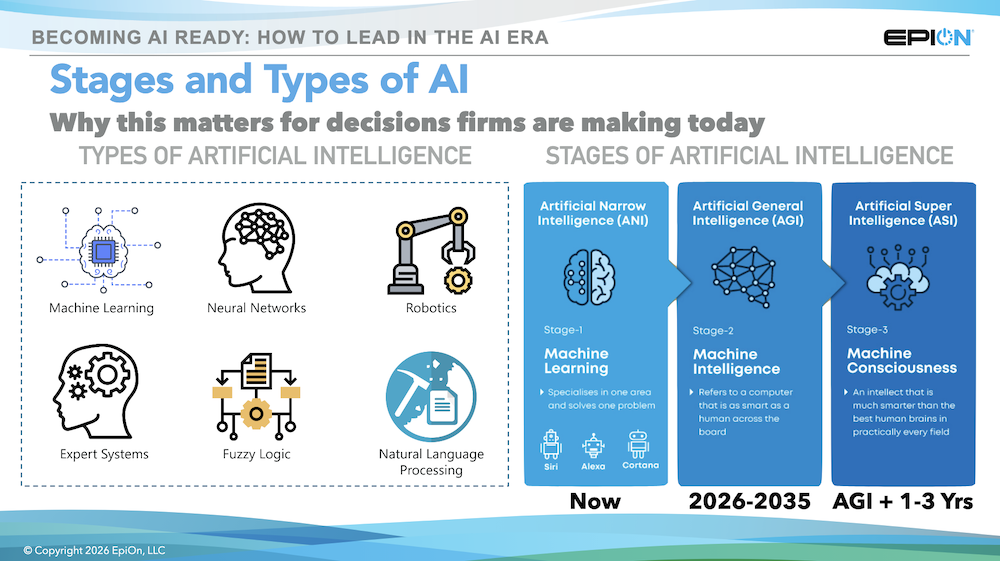
AI is evolving faster than traditional IT strategies can keep up.
We’re already seeing:
- AI integrated into everyday business platforms
- Early-stage autonomous AI agents performing tasks independently
- AI outperforming humans in specific workflows
At the event, this shift was captured clearly:
“AI is moving from assistant to coworker—and soon to independent operator.”
For Tennessee businesses, this means:
Waiting until AI feels “safe” isn’t a strategy—it’s a risk.
What Happens If Your Business Isn’t AI-Ready?
Without AI readiness, organizations face increased risk and reduced performance.
Common issues include:
- Shadow AI usage across teams
- Data exposure through unapproved tools
- Poor data quality leading to inaccurate insights
- Lack of visibility into how AI is being used
In many Tennessee organizations, AI is already being used—but leadership has no visibility into it.
That’s where risk begins.
What Are the Key Pillars of AI Readiness?
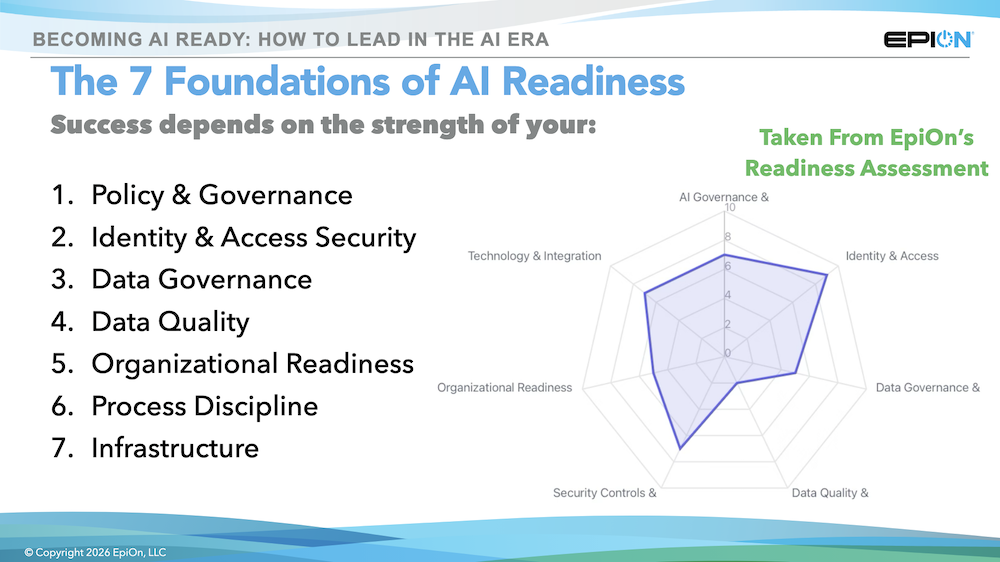
AI readiness depends on eight core areas that determine whether AI helps—or harms—your business.
1. What Role Does Governance and Policy Play in AI Readiness?
Clear policies define how AI is used, what tools are approved, and how data is handled.
Without enforcement, policies don’t reduce risk.
2. Why Is Cybersecurity Critical for AI Adoption?
AI increases access to systems and data—making cybersecurity services essential.
For Tennessee organizations, this is especially important as cyber threats continue to increase across industries like healthcare, education, and professional services.
You need:
- Identity and access management
- Monitoring and logging
- Alignment to proven frameworks like CIS Controls
3. How Does Data Governance Impact AI Effectiveness?
AI depends on data access—but uncontrolled access creates risk.
You need:
- Defined permissions
- Clear ownership
- Controlled access
4. Why Does Data Quality Matter for AI?
AI uses what it finds—not what’s correct.
Most organizations deal with:
- Redundant data
- Obsolete files
- Conflicting sources
Bad data leads to bad decisions—at scale.
5. What Is Data Security and Monitoring in AI Environments?
You need visibility into how data moves—especially into AI tools.
Without monitoring:
- Sensitive data can be exposed
- Risks go unnoticed
6. Why Is Employee Training Essential for AI Readiness?
Employees are already using AI—often without guidance.
This creates:
- Shadow AI
- Inconsistent usage
- Increased risk
Training provides:
- Clear expectations
- Safe usage guidelines
- Better outcomes
7. How Do Business Processes Affect AI Adoption?
AI can only automate what is clearly defined.
If your processes are:
- Unclear
- Undocumented
- Inconsistent
AI won’t scale them effectively.
8. What Role Does IT Infrastructure Play in AI Readiness?
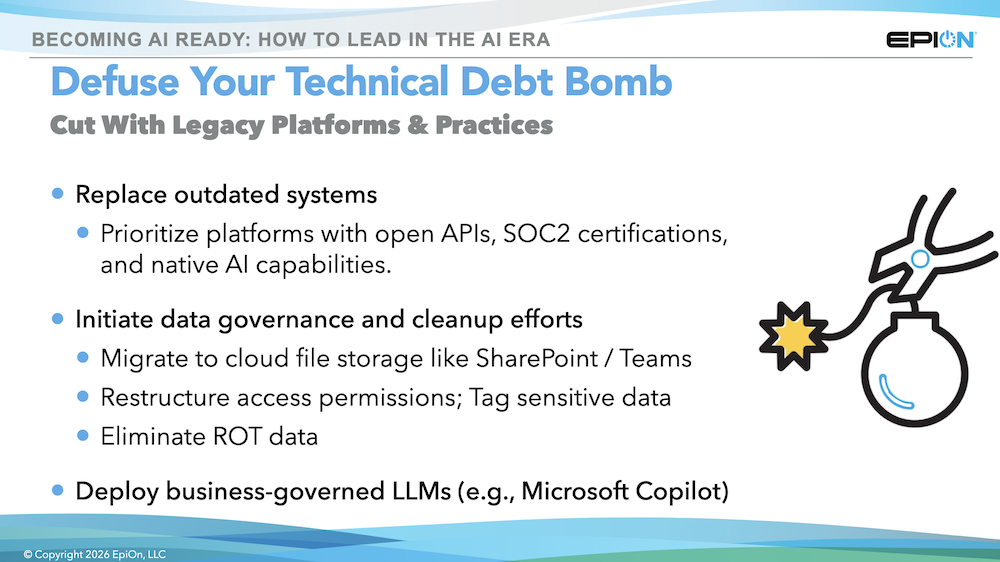
Modern IT systems are required to support AI integration and scalability.
Many organizations across Tennessee are still working through:
- Legacy systems
- Limited integrations
- Security gaps
These challenges slow down AI adoption and increase risk.
How Can Tennessee Businesses Start Becoming AI-Ready Today?
Start with clarity—not complexity.
✔ Create an AI Use Policy
Define approved tools, data usage rules, and employee responsibilities.
✔ Identify Repetitive Work
Ask: “What do we do over and over again?”
These are your best AI opportunities.
✔ Assess Your IT Environment
Evaluate:
- Cybersecurity posture
- Data structure
- Process clarity
- Technology readiness
Measured—not assumed.
✔ Clean Up Your Data
Focus on:
- Removing outdated files
- Defining a source of truth
- Fixing permissions
✔ Train Your Team
Provide:
- Safe AI usage guidance
- Clear expectations
- Real use cases
What Does AI Success Look Like for Your Business?
AI success isn’t about automation—it’s about measurable outcomes.
With the right foundation, AI helps you:
- Reduce inefficiencies
- Improve decision-making
- Strengthen cybersecurity
- Increase productivity
This is what we mean by: Measurably Better IT®
Not assumed. Measured.
Key Takeaways: AI Readiness for Tennessee Businesses
- AI is already being used—whether you’ve approved it or not
- AI amplifies your current environment (good or bad)
- Cybersecurity and data governance are critical first steps
- AI readiness is a business strategy—not just a technology decision
- Preparation determines whether AI becomes risk or advantage
Ready to See Where Your Organization Stands?
AI isn’t slowing down—and neither are the risks.
The real question isn’t whether to adopt AI.
It’s whether your organization is ready for it.
As a Tennessee-based provider of managed IT services and cybersecurity solutions, EpiOn helps organizations align their systems, reduce risk, and adopt AI with confidence.
Schedule your IT assessment todayRelated Post