Becoming AI-Ready in K–12: A Cybersecurity & IT Strategy Guide for Tennessee School Leaders
What K–12 Leaders Need to Know About AI Readiness
AI is already being used in schools—often without oversight. To adopt it safely, K–12 districts must align cybersecurity, IT infrastructure, governance policies, and staff training. Without these foundations, AI increases risk instead of reducing it. The safest path forward is to start small, follow proven frameworks like CIS Controls, and treat AI as a multiplier of your current environment—not a solution to underlying problems.
AI Is Already in Your Schools, But Are You Ready?
Artificial intelligence is no longer a future conversation in K–12 education.
It’s already being used—by teachers, students, and administrators—often without formal oversight.
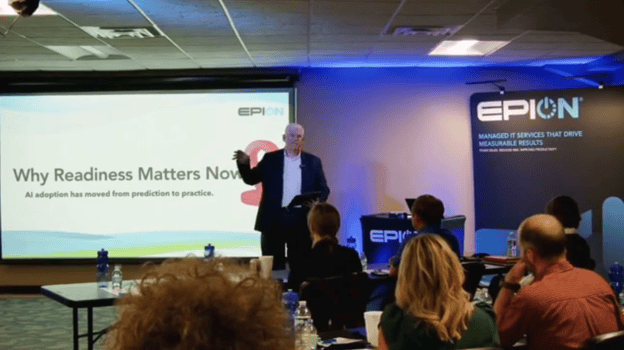
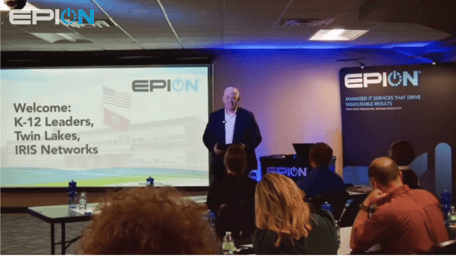
At Epion’s event, “Becoming AI Ready: Leading Tennessee K–12 in the AI Era,” one concern surfaced repeatedly:
“Are we really safe? Do we already have bad actors inside our systems and just don’t know it?”
That question captures the reality facing school leaders today.
- AI adoption is accelerating
- Cyber threats are increasing
- IT teams are stretched thin
And many districts are being asked to innovate…before they feel secure.
What does it mean to be AI-ready in K–12?
AI readiness means a school district has the cybersecurity, IT infrastructure, governance, and training needed to adopt AI safely and effectively.
An AI-ready district includes:
- Defined AI policies and acceptable use guidelines
- Strong cybersecurity controls and vendor oversight
- Trained educators who understand responsible AI use
- Modern IT infrastructure capable of supporting AI tools
- A strategy for equitable access across students
Without these, AI adoption introduces more risk than value.
Why is AI risky for K–12 school districts?
AI is risky when introduced into environments with weak cybersecurity, unclear policies, or outdated IT systems.
At the event, leaders highlighted real threats:
- 87% of cybersecurity incidents begin with phishing
- 90% of breaches stem from weak or stolen credentials
- Over 50% of districts have faced ransomware threats
Vendor risk is also increasing rapidly:
“Our biggest problem is our vendors… and a lot of that we can’t control.”
The PowerSchool breach demonstrated how third-party systems can expose millions of student records—even when internal systems are secure.
How does AI increase cybersecurity risk in schools?
AI increases cybersecurity risk by amplifying existing vulnerabilities—especially in identity management, vendor systems, and user behavior.
Key risks include:
- AI-powered phishing that is harder to detect
- Weak password practices leading to unauthorized access
- Data exposure through unvetted AI tools
- Third-party platforms storing sensitive student data
As discussed at the event:
“AI is going to introduce these zero-day threats by the thousands.”
This makes strong cybersecurity services and IT governance essential before scaling AI.
What framework should schools use to become AI-ready?
Schools should use structured cybersecurity frameworks like CIS Controls to reduce risk and guide AI adoption.
Instead of relying on opinion, frameworks provide:
- A prioritized roadmap
- Measurable progress
- Proven risk reduction
The CIS Controls framework includes:
- 153 best practices
- Tiered implementation levels
- A focus on “cyber hygiene” first
At the event, one key takeaway:
“If we can mitigate 80% of the risk, we reduce ransomware risk by 97%.”
What are the key areas TN schools must improve before adopting AI?
Schools must strengthen seven core areas to become AI-ready.
1. Governance & Policy
Clear AI usage policies and enforcement mechanisms
“Having a policy is one thing. Following it is something else entirely.”
2. Cybersecurity Maturity
Identity controls, vendor risk management, and data protection
Learn more about EpiOn’s managed IT services: https://www.epion.com/
Explore cybersecurity services for schools: https://www.epion.com/
3. Staff Training & AI Literacy
Helping educators use AI responsibly and effectively
4. IT Infrastructure & Technical Debt
Modern systems that can support AI workloads and integration
5. Equity & Access
Ensuring all students benefit—not just those with home access
6. Acceptable Use & Academic Integrity
Defining whether AI is a tool, a shortcut, or both
“Some educators see AI as cheating. Others see it as essential.”
7. Sustainable IT Funding
Prioritizing long-term investments in IT services and cybersecurity
How can schools start becoming AI-ready today?
Schools can begin AI adoption safely by focusing on foundational improvements and small pilot programs.
Practical steps include:
Strengthen identity and access management
- Enforce strong passwords
- Implement password managers
Improve cybersecurity awareness
- Ongoing staff training
- Phishing simulations
Use a proven framework
- Adopt CIS Controls
- Focus on high-impact improvements
Start with pilot programs
- Test AI tools with small groups
- Identify high-ROI use cases
From the event:
Teachers using AI tools are saving 7–10 hours per week on lesson planning and administrative work
What is the future of AI in K–12 education in TN?
AI will transform education through personalized learning, automation, and new teaching models.
Expected developments include:
AI tutors for every student
Adaptive, personalized learning experiences
Teachers as facilitators
More focus on collaboration and mentorship
Integrated AI systems
Connected tools that enhance learning outcomes
The pace of change is accelerating—and districts that prepare now will lead.
Key Takeaways: Becoming AI-Ready in K–12
- AI is already being used in schools—often without governance
- Cybersecurity must come before scaling AI adoption
- AI amplifies both strengths and weaknesses in IT environments
- Frameworks like CIS Controls significantly reduce risk
- Small, strategic steps lead to long-term success
How EpiOn Helps School Districts Become AI-Ready
EpiOn partners with K–12 organizations to deliver:
- Managed IT services for schools
- Cybersecurity services and school cybersecurity solutions
- Reliable IT support for education environments
- Strategic guidance for safe AI adoption
This approach is grounded in real conversations with school leaders navigating these challenges today.
Ready to Become AI-Ready?
AI is already transforming education.
The question is whether your district is prepared to adopt it safely.
Learn more about EpiOn’s IT services and cybersecurity solutions: https://www.epion.com/
Or connect with our team to assess your district’s AI readiness
Have Questions?
Explore our frequently asked questions
AI readiness means having the cybersecurity, IT infrastructure, governance policies, and staff training needed to safely adopt AI technologies.
Because AI amplifies existing vulnerabilities. Weak security systems become higher-risk environments when AI is introduced.
Frameworks like CIS Controls provide a structured, proven approach to reducing risk and improving security posture.
Yes—but with clear policies, training, and oversight to ensure it supports learning rather than replacing critical thinking.
Schools need managed IT services, cybersecurity services, and scalable IT infrastructure to support AI tools safely.
Start with pilot programs, train staff, adopt security frameworks, and ensure governance policies are enforced.
Related Post